The principles of NHE maintain that the horse retains his right to say no to us in trust of our honorable acceptance of such a response. In other words, when he says no, we will not continue to badger him with the intent of making him feel uncomfortable or fearful until he resigns himself to saying yes.

Edward Pershwitz: In my mind one’s ability to say “no” is an absolute prerequisite to one’s willingness to say “yes.” If the horse is merely compliant and the human is convinced that the horse is saying “yes” then monumental effort can be expended in the hopes to achieve harmony only to widen the gap and inflict more damage on the relationship. That is because all that effort is spent within the framework that ultimately reinforces the lack of the horse’s freedom of choice.
D: In non-NHE approaches, a “no” answer from the horse may only signal the human to pull out the techniques of coercion or force. Subtle or gross, he or she keeps after the horse until he says yes. In our view that “yes” is not a true “yes”, but one of resignation or surrender to feel relief from the pressure/discomfort/pain/fear of the coercion.
Any horse who has been subjected to that kind of training may give up even trying to say no. He develops a coping strategy of always saying yes to reduce the risk of punishment or pain.
When we come to NHE from training disciplines that have established a false “yes” response from the horse we have to be very careful. The horse may not yet be clear that he can express himself freely now. The conditioning to say “yes” only because saying “no” usually means a greater discomfort may run very deep. Not realizing to what degree it affects the horse, or not recognizing the first subtle attempts to say “no” may, however unwittingly, reinforce the false “yes”.
E:The horse saying “no” may be disconcerting to a loving human as it may be perceived as a sign of rejection. In reality it needs to be celebrated as the starting point of a relationship worth having. One of the biggest challenges of the early stages of relationship is actually getting the horse to start saying “no.” It’s very important to understand that this is the beginning of a healing process and the beginning of communication that simply didn’t exist before. The horse is starting to realize that he can have an opinion that matters and a degree of freedom to express it.
Counterintuitive as it may sound, the opposite is often a much stronger reason for concern. If the horse keeps saying “yes,” especially early on, the human must keep in mind that his “yes” may not be a “yes” at all. For horses that have a history of being physically or psychologically dominated “yes” may not have ever been a free “yes”. In fact, in most cases it hasn’t. “Yes” out of helplessness, “yes” out of futility of any attempts to be considered or even heard isn’t really a “yes.” As you said, it’s a coping mechanism to avoid punishment for disobedience.
D: Before even getting into any formal NHE lessons we can easily explore the communication dynamics in our daily management activities of feeding, grooming, mucking the paddock, hoof care, etc. All would allow the horse opportunities to express his opinion.

At first, we might think we already do give the horse the freedom to choose and to be heard. However, our own conditioning to be in control of the horse and to have respect from him may be so deep that we don’t even notice it. Add to that that we have good intentions for the horse, or are trying to meet obligations of care, so we don’t leave the horse much room to maneuver on his own.
E:Exactly. Here’s an example: It’s really hot and your horse is all sweaty, itchy and apparently miserable. You show up with a hose to give him a shower, but instead of walking up to you he slowly moves away to the far side of the paddock and starts gazing away.
“Okay,” you think, “you just didn’t get it, let me show you it’s just a shower, it’s going to feel great.” So you go to get him and he follows you back hesitantly. You start the water but he, again, tries to walk away.
“Oh, come on,” you think, “look, it’s not a big deal, let me just do it and you’ll realize that you actually enjoy it.” So you put your arm around his chest to hold him back but he doesn’t seem to notice and walks right through it.
“Augh,” you think, “you’re just being difficult. Don’t you realize I’m doing this for your own good?” So you go grab a halter, bring him back again and hold him while you are hosing him off. He doesn’t argue. Once you are done and the halter is removed he turns around and leaves.
“Okay,” you think, “you’ll feel so much better now. See – it wasn’t so bad, was it?”
What just happened is the horse gave you three loud and clear “nos” in a row, along with the display of habitual coerced compliance that you beautifully reinforced. You showed him that you are not listening and that you will do whatever you want regardless of how he feels about it and that you will keep insisting until he complies. For him, if he doesn’t feel particularly threatened by your actions, the easiest way to get rid of the pressure is letting you do your thing. He also got yet another confirmation that trying to talk to you is pointless.
“No” simply means “no.” It doesn’t mean “try again.” It doesn’t mean that the horse just doesn’t get it, or that he’ll learn it’s not a big deal, or that he’s being difficult or naughty, or that he will be okay with it in the end. If this sounds like quotes from sex offender education it does for a good reason. There are a lot of parallels when one is forcing oneself on another.
“No” means the freedom of choice for any reason or no reason whatsoever. It means that if he doesn’t want to stay with you he’s not going to be chased. It means that if he doesn’t want to be touched (groomed, hosed off, etc.) he won’t be. It means that if he’s not engaged in whatever you might think is fun he doesn’t need to participate. It means that his own understanding of what’s better for him at the moment is respected. And if he doesn’t have this essential right then he’s never going to come to you because he’s deprived of the very essence of what it takes to connect, to make friends, to build trust. It also means that you can make him do what you want but you cannot make him like you. That he can only do on his own accord and not because you have a notion of what he’s supposed and not supposed to do or feel in response to your actions, care, love, or tokens of affection.

D: Something very interesting happens to the “yes” response when the “no” is respected. This applies to the character of the human “yes”, too. If we preoccupy ourselves with the horse always ending up saying yes, it is very likely that we will be spending a lot of energy on saying no to him. As your example illustrates, we will be focused on correcting him, on suppressing his first impressions or expressions, and manipulating him, effectively missing or worse, ignoring, valuable information from the horse.
When “no” and “yes” may be freely given each answer offers possibility of new discovery. The human who honestly hears the horse say “no” in effect says “yes” to the horse at the same time. Yes, I hear you. Yes, that is interesting that I asked you to do x and you showed me y. Let me explore that with you. What can you tell me?

The horse who can say “no” becomes interested in saying “yes” because he knows he can walk away at any time.
Accepting the horse saying no acknowledges his understanding of his own body, it respects his privacy and physical security, and it recognizes and accepts the validity of his preference, as long as it is safe for him and others under the circumstances.
E:Speaking of safety, recognizing the horse’s right to say no is directly related to how safe it is to be around the horse. In the state of true friendship humans and horses alike don’t look for ways to hurt each other or get an “upper hand.” A usual part of typical horsemanship education is learning safe and unsafe areas around the horse. The assumption is that if you happen to be in the unsafe area the horse is likely to take this opportunity to hurt you. Moreover, the horse is also specifically taught, typically by punishment, to not assume a position around his handler that would be considered unsafe. For example a horse moving his butt toward a human with, or without, any intention to kick will likely be punished. The notion that the horses butt doesn’t fire kicks for no reason is typically dismissed in favor of a variation on the theme that the horse is an animal and no one knows what he has on his mind.

An interesting question to ask is how you know what a human with a hammer in his hand has on his mind. And why, then, do we not assume that he will hit you with the hammer if you happen to be within a hitting distance. Why is it safe (barring freak accidents) to be next to a human equipped to hurt you but not to a horse? Well, a simple answer is that the human is free, friendly, and has no reason for aggression. Take that freedom away, force the human into the corner, create an unsafe, threatening situation, and he will probably hurt you given an opportunity. This connects right back to the horse’s right to say no. When we take that right away we are running a serious risk of coerced compliance suddenly turning into aggression, and have to take extra precautions to prevent it – precautions that also have a side effect of creating more tension and more mistrust.
Accidents can happen, of course. Horses are large, very powerful, have hard feet, etc. They can get frightened and move very quickly. Anyone who comes into a close contact with them needs to be constantly aware of the exact position of their own and the horse’s bodies, deeply understand horse behavior, and have the ability to foresee dangerous situations. By no means am I suggesting that sensible safety measures be ignored or relaxed. But what I am suggesting is that as long as he is free and can say no at any time without running any risk of disapproval or reprimand and (importantly) he knows it he is no more dangerous than a person with a hammer. A hammer head accidentally flying off the handle can kill you too.
D: That’s a good point. Generally, the conventional non-NHE rules of engagement are one-sided and geared toward our control over the horse in service to our own use and benefit. In that case we are always expecting an uprising or resistance. NHE has shown that the horse is very capable of controlling himself and able to understand how to interact thoughtfully with humans. Being free to say no and have it respected is essential to that.
In some cases, in the novice NHE student’s enthusiasm to give freedom and to feel free cooperation from the horse, he or she may exhibit impatience and explore exercises and lessons using reward-only conditioning techniques, misunderstanding the heart of a truly free “yes” or “no” response.
The School is not lenient on this matter and students will be directed to back up. It is essential to understand when the horse is saying “no” and to recognize whether the horse knows or doesn’t know he can say “no” for the mutual relationship to develop.
E: School lessons should never be attempted until and unless the horse says “yes” to them. Anything else immediately translates into forced compliance, which is a dead end for any relationship. It therefore follows that both making sure that the horse knows he can say “no” and that the human can recognize a “no” however subtle it may be is foundational to any future development.

The NHE discouragement from starting the lessons before the relationship is ripe enough and both the human and the horse are ready for free, willing and mutually enjoyable cooperation may be easily perceived as “holding back” or insufficient appreciation of one’s progress. This simply only means that NHE offers a degree of protection from premature actions that often lead to a slippery slope back into the state of forced compliance, which sadly is a common and quite stable state for even most ardent horse lovers hoping to achieve connection with their horses.
D: Honoring the horse’s right to say no is not abandoning him to have no feedback from us, it is not a pass to neglect hoof care or medical care because he says no, and it doesn’t mean we stop asking him to do things or to participate with us. When the horse says no it is part of a process of communicating within the long-term relationship. “No” may signal the end of a specific conversation, but it doesn’t mean the end of growth in the relationship.
E: It may, and in most cases will, take time. It will require a lot of patience and a lot of quiet, thoughtful observation. Just like a human, the horse needs to invest a lot in you to open up. Embracing his freedom to say “no” and be heard is only the beginning of a long journey toward building a partnership where being together is a genuinely free choice, a connection that is free of coercion and manipulation, a relationship that is liberating and empowering rather than possessive. There will be many, many more steps along this path, some easier, some harder. But they will all share the same quality – both human and horse will create every element of this new reality together freely and willingly.

* We recognize that just about any horse with whom we will engage has had his initial choice as whether to even be with humans removed by the lineage of domestication or recent capture from the wild. However, NHE acknowledges these horses’ great dependence on us. We are innovating horse keeping (caretaking) paradigms that expand physical freedom as much as is practical and safe within the current state of human dominance and the individual caretaker’s means. The primary focus of the School is to allow the horse psychological freedom under all variations of living environments and within the human horse relationship.
]]>This is the first of a series of discussions on critical NHE topics.
Donna Condrey-Miller: When it comes to horses and humans being together there is more than one perspective on how that relationship should be organized. Nevzorov Haute Ecole is a School of hippology with the perspective focused on free and mutual relationships between human and horse, operating from a place of communication grounded in equality.
This differs entirely from the long-time conventional approach of methodological reward and punishment techniques after which the horse is conditioned to behave and respond in compliance based on his anticipation of consequences. While each horse will respond to this approach uniquely, the techniques are more or less fixed with the idea that eventually every horse will reach a certain level of compliance. Unfortunately, the horse has little to no say in what she is to perform and the techniques may escalate from subtle to severe as deemed necessary for the human to reach his or her desired result
Edward Pershwitz: There are many fallacies with this conventional approach. First, the relationship is initiated as a form of control and develops with the goal of compliance, even in the cases when the human sincerely believes that a “connection” or a “partnership” is being built. The horse inevitably gets forced into this “partnership” with various means of coercion to satisfy the ego of the human. Second, by applying or developing one-size-fits-all training techniques the horse is effectively reduced from an individual to a member of a uniform primitive mass with predictable reactions to stimuli. What the human fails to realize is that by mechanically applying a specific set of techniques, it is the human, rather than horse, who renders him- or herself as a member of a uniform mass. And third, the end goal is the result rather than the process, which completely ignores the natural state of the horse of living in the moment. It is no surprise that the horse has no incentive to participate other than to get a reward or avoid punishment, which isn’t a marker for a healthy relationship.
D: Right, generally because there is a mold to fit with that approach, any part of a horse’s natural preferences or capabilities that doesn’t fit that mold must be suppressed. Exactly what the horse should or shouldn’t do is uniform to the method and thus are the problems to be solved identified. If the horse is naturally missing any elements required to fill the mold then he must be forced into it. When the horse fits the mold he is considered good, when he doesn’t he is considered bad, or at least disappointing. I’ve witnessed many humans miss the wonderful horse right in front of them for a lifetime because they only look at what they think a horse should be and do not engage with who the horse is. I certainly noticed this happening to me back when I was following those methods.
E: Ironically those “problems to be solved” aren’t problems at all, but a mere reflection of the human’s inability to approach the horse as a partner rather than utility and to consider some of the horse’s essential needs: the sense of safety, the freedom from pain, the freedom of expression, the companionship with others. As long as these are being ignored the horses will respond, each in their own way, with what humans will identify as “problems.”
D: It comes down to teaching a human how to remove so-called conflict with a horse by obliterating the horse’s resistance. It’s impossible to do this without also damaging your own sensitivity to some extent, if not destroying it entirely. Honestly, the less sensitive you are to the horse, the better the techniques work. De-sensitizing is a key component of training a horse in this manner, but the human student will get similar instruction about herself. “Don’t let the horse get away with that!” is to say, don’t let his emotions get to you!
What is foundational about the School of NHE is that it does not relegate the horse to a role of compliant object, but allows and encourages him to express his point of view, including his refusals, without punishment. While there are a few techniques to consider, it is the principles of communication without force, coercion or judgment that are the basis of building a relationship with the horse. The principles are fixed, but each horse human pair will manifest the results uniquely and creatively.
E: This cannot be overstated. The principles provide the foundation for the entire NHE philosophy and practice but they are not, and cannot be, prescriptive of the specific steps or actions one takes to build a relationship. Unlike training, relationships are unique and non-transferrable. Unlike training, relationships recognize one’s freedom to enter or exit at any time. Unlike training, relationships cherish individuality rather than conformance. There are no cookie-cutter relationships – it is simply impossible.
“Not letting the horse get away with something” has a special place in various training techniques, for it is as common as it is absurd. We seem to forget that since horses have no speech the only way for them to signal anything is by behavior. At first these signals are subtle but humans, in general, aren’t too keen on observing subtleties. Then they become stronger, and stronger, and finally get deemed to be something the horse is not supposed to get away with. What follows is a form of demonstration of “who’s the boss” – another common cliché of horsemanship education. One can run a mental experiment of imagining being unable to speak and trying to signal discomfort or an essential need. At first those signals are completely ignored and then when they become less subtle a form of correction follows. Not exactly a step toward harmony, is it?
D: NHE really is a 180 degree turn of perspective on how to approach relationship with a horse in contrast to training for rote obedience. When we meet a particular horse we may know some very basic things about horses in general, but in order to have a relationship with this particular horse we must pay close attention to what the horse offers of herself without judging it as right or wrong, good or bad. We allow her to contribute extensively to the framework of the relationship. We meet her where she is, develop our communication skills, which include how we receive information, and encourage her expression and thinking, so that we can have a dialogue where her input carries weight.
Without relying on a syllabus of cumulative techniques, we begin the relationship by looking inward and questioning our own motives for why we ask a horse to do anything. We first accept that she owes us nothing.
E: Examining our motives for being with horses and for asking them to do something for us takes a lot of soul-searching and can lead to unexpected results. For as long as our motives are centered around our own benefits, be that tangible or psychological, and the horse is a mere means to the end – however this may be disguised with the delusion that the interaction is driven by our love for the horse – building a healthy relationship would be impossible. True love is liberating rather than imposing an expectation to fit into a mold, and no tokens of affection can make up for taking away the liberty. This is true for human relationships as well, but it is even more so in human-horse relationships as most tokens of affection are completely meaningless to the horse. Ironically, putting the horse first and his understanding of his own well-being before ours may in many cases deprive us of the very motivation to enter the relationship at all, unless of course we are willing to make a shift in our own mind to liberating, rather than restrictive, love for the horse.
D: Helping students consider that horses don’t necessarily like – at all – or perhaps even need to do the things humans often want them to do opens up a path for discovery of what a horse does like to do, what she does need, and how one can safely and healthfully fulfill that for her. How can one engage her in the necessary care activities without violating her trust or causing physical or emotional pain? It’s a deep psychological shift.
E: NHE helps newcomers discover their own way to a honest assessment of their expectations: for the horse, for themselves, and for the role each has in the relationshiop. This can be daunting for people who are ingrained with the reward-punishment style of learning, and the judgmental way of measuring success. The challenge may be rooted in our own upbringing. Our entire system of education is based on developing skills rather than applying principles. This naturally translates into us being conditioned to learn by following a cookbook and to measure success by how well we can produce correct answers. Recognizing that horsemanship is an art where there can be no cookbooks and there are no single correct answers is the most important shift that one has to make to get anywhere at all. For as long as one looks for guidance on how to build a connection with a horse from anyone but the horse, the horse cannot become a partner in creating the connection. Since it takes two to connect, when one is missing nothing can possibly work. While this may appear like a simple idea to grasp, in reality this is one of the most challenging concepts to fully embrace.
D : At first we have to let go of many beliefs and apparent knowledge we have about horses – or as it is said, unlearn – before we can have intellectual and emotional room to recognize and develop new patterns of communication and new measures of what constitutes a relationship. The horse also will experience this transition for herself and we have the added responsibility of not overlooking her need to adjust and heal. It’s very hard to shake the sense that the horse should want to do things for us or that she should like us just because we love her. And when we come to NHE having just decided in our minds that we now consider her free and equal our expectations for her to reciprocate with delight might even grow stronger without our even realizing it. Up until this point we may not have given the horse’s point of view much consideration as being valid and for her to understand her new freedom and acceptance can – and most often will – take time. This can lead to some misunderstandings. One might also feel confused about “how and what am I supposed to do with this horse when I will no longer use physical or psychological pressure?”
When most of the world, so far, continues to run on this system of merely acquiring skills with little critical thinking you mentioned, the new paradigm can feel out of reach as a reality, even with the support of the online Forum. Students of NHE often are still closely surrounded by the very equestrian industry they are wanting to walk away from. In many cases, greater parts of our social lives, careers and even our families have been tied up in the equestrian world. It’s hard to go against that, especially if there is no other NHE person nearby.
NHE seminars are a great way for newcomers and long-time students alike to spend a few days immersed in the culture of the School. Also, since most NHE students still live far from each other, the seminars are a lovely way to finally meet face-to-face.
E: There is a tremendous value in face-to-face interaction. Even though the online Forum is the main resource for NHE exchange internationally, nothing can replace being able to connect with real people who “live” NHE. Internet enables vast opportunities for exchange but online presence is necessarily more measured than human contact. Just like you are a different person when you interact with your spouse, your kids, or your grandmother, our online presence never equals who we are as real people. When I went to my first seminar it was astonishing how my mental image of someone I only met on the forum was different from the actual person. And there was so much to learn just from casual conversations!
D: I enjoy combining the theory discussions with interactions with resident horses at the seminar venue. The horses contribute as teachers themselves by freely displaying their nature. With no promise or expectations of particular results or behaviors participants see living examples of how the basic interactions of being with, and taking care of, a horse are approached with the NHE principles. From there we elaborate the connection to more complex communication potential that goes from games to Haute Ecole elements.
We explain how to evaluate the behaviors of horses, how to receive overtures from the horse and how to initiate or conclude an interaction ourselves. In standard equestrian and training circles the full range of emotional expression and initiative thinking by the horse are cause for action to suppress, but in NHE these are what we tune into as our guides for building an open dialog with the horse. We introduce participants to the concept of cumulative understandings between them and a horse that turn into a deep mutual and respectful relationship.
E: For most people, even horse people with a lot of experience, free expression from the horse is something that they have never witnessed. Traditionally, the training mindset is so ingrained in the way we think about being with horses, that all we see is either rebellion (to be thwarted) or coerced compliance (perceived as harmony). The art of horsemanship is generally reduced to overcoming rebellion and achieving coerced compliance. By doing so, we damage our horses to the point where recovery may take years or even never happen at all. I can only compare it to what repeated rape can do to one’s ability to enjoy intimacy. Seeing what free expression really looks like can be truly eye-opening, and while it may appear to be unattainable with “regular” horses, NHE fosters transformation of the human mindset that enables it to happen in any horse-human relationship.
Register for NHE Seminar with Donna Condrey-Miller September 22-24, 2017 in Sebastopol, California
Donna-Condrey Miller, Representative in California
Edward Pershwitz, Representative in Texas
]]>
Edward continues to show his talent and passion from the personal journey with his horses, his learning, perseverance and understanding, along with willingness and capability to share experience and advice, both within the forum and in his community.
Edward can be reached at: NHE.Texas@gmail.com
]]>Allowing your horse expression, thinking, learning and choice for mutual understanding. It is teaching without any kind of forced restraint, no halters, bits, spurs or whips. No Riding / No Horse experience necessary
It is about perception of life, being who you are, taking off rose-coloured glasses, letting go of old doctrines, seeing interconnectedness within our world and how simple it is to not only understand another species but also ourselves.
Discover the simplicity which seems so elusive
For booking or info contact: Sorry, registration now closed
Workshop: Saturday, Sunday: August 20 & 21, 2016
]]>
For more information and registration deals visit the Calendar at donnacondrey-miller.com
Email: lucinka.votypkova@seznam.cz
]]>
Increasing numbers of scientists and legislation recognize animals to be sentient beings, more people are choosing vegan diets but where does horseback riding and the use of horses for sport fit into our changing views of animals?
Horsewomen Stormy May, Ren Hurst and Donna Condrey-Miller will share their journeys in a book reading and exploration of the question, “How unconditional is our love?” in Ashland Friday night, June 24th at the Haven. These women have been participating in a quiet revolution in the way horses are treated around the world. May, Hurst, and Condrey-Miller developed a friendship through participation in Nevzorov Haute Ecole (NHE), an online school founded by Lydia Nevzorova to convey the teachings of her husband Alexander Nevzorov, a Russian horseman, journalist, researcher and historian. Nevzorov learned traditional horsemanship, natural horsemanship, relationship-based training and then he worked on intellectual training as he taught his horses Latin. After getting to a certain point he realized that most of what we do with horses is not in their best interest and is not coming from unconditional love. Nevzorov now advocates for horses to be cared for in species-appropriate environments and for humans to work on their own inner development.
Donna Condrey-Miller, an NHE representative in California says, “The philosophy behind Nevzorov Haute Ecole includes the foundation of human self development which is the key to unlocking the depth of communication that is possible between human and horse. Starting with the practice of not forcing our horses to do anything, we explore what we can do and how to do it in a way that encourages the horse to think and express himself freely in the relationship.”
Stormy May, producer of the documentary, “The Path of the Horse” and author of a book of the same name says, “If we want to live in a world of peace and love, we’re going to have to step into the reality of what that looks like in everyday life. The three of us happen to have been horseback riders. In our search for understanding how to work with horses without using coercion or force we were led to the teachings of Alexander Nevzorov. As a result, we all have developed and embodied our own ways of being with horses as an opportunity to express unconditional love in our lives. This also led us to experience deeper connections with humans and other animals as well. We each know the value of walking into what challenges us, and through understanding ourselves we are able to accept, acknowledge and empathize with the position of others leading to a greater capacity to heal and enhance the lives of those around us. All this inner work really does pay off; the world is a better place because of the people we’ve become. I think as we continue to grow together as a team we’ll naturally inspire more people to not be afraid to look within to heal ourselves and all our relations.”
Ren Hurst, a former horse trainer from Texas, wrote a book about her experiences with horses called, “Riding on the Power of Others.” She also created the New World Sanctuary Foundation, a 501c3 non-profit organization. About the Ashland based sanctuary Hurst says, “The work we do here has many layers to it, and it can get very deep, but the most important thing to understand is that we offer a life of total freedom to the horses which changes them dramatically. By total freedom, I mean they are never forced, manipulated, or controlled in any way for another’s benefit. This heals them and allows them to be an example of what we could become if we offered such freedom and unconditional love to one another. That’s the healing aspect of our work, and how that actually looks and what it means is takes a considerable amount of learning to understand.
The sanctuary provides a permanent, loving environment to animals in need, but we are more importantly a practice center where people can come to practice just exactly what it means to love unconditionally — beyond feeling and into action.”
The Friday night presentation will be followed by an NHE weekend seminar at the New World Sanctuary Foundation in Ashland. For more information contact Donna Condrey-Miller at starfarmranch@gmail.com .
For more information and registration details visit:
]]>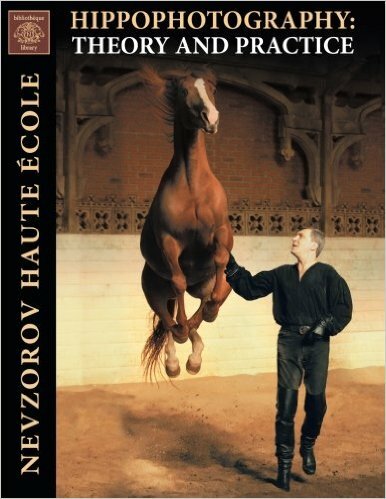 Available on Amazon
This book reveals the secrets to creating the kind of captivating images synonymous with Nevzorov Haute École equine photography that have earned appreciation and admiration the world over. Practical advice on the technical aspects of a variety of equine photography genres will allow you to develop enduring skills while discovering your own style. From the candid shot to the portrait, from anatomical dissection and hoof photography to the educational still of the School, you will learn to showcase your unique point of view and develop your natural talent. Well suited to both beginners trying to find their way in photography and professionals wishing to become acquainted with the Nevzorov Haute École style and new genres of equine photography, Hippophotography: Theory and Practice uses clear language and illustrations to make it easy.
]]>
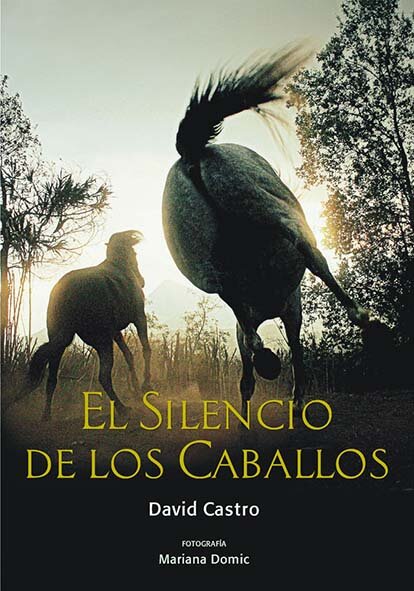 The Silence of the Horses
In this first book, David Castro condenses reflections arising from his life with horses inquiring about cultural paradigms that underlie human bonding behavior and questions the fact that man awarded himself the rights of dominance over the other living beings and the natural environment.
His work on educating horses, beside the research and training within Nevzorov Haute Ecole, has led him to make a comprehensive review of everything known regarding the man-horse relationship.
With a prose that reveals a brilliant and sensitive intellectual within this former horse tamer and children’s teacher, the author leads the reader to extend an introspective look into the connection with the “other”, even unintentionally.
This book is recommended not only for those wishing to make contact with horses for the first time, or for beginners who seek to cultivate a better way to interact with them, but also for anyone interested deepening in the understanding of human behavior.
The attractive and powerful images captured by Chilean photographer Mariana Domic enliven this journey about horses and humans possibilities.
Title : The silence of the Horses
Language: Spanish
160 pgs . B&W
170mm x 240 mm
Paperback
David Castro. 2015
Facebook Page: https://www.facebook.com/pages/El-Silencio-de-los-Caballos/374408279425151?ref=profile
Mail contact: concaballos@gmail.com
]]>